Friday, 16 Oct, 2026

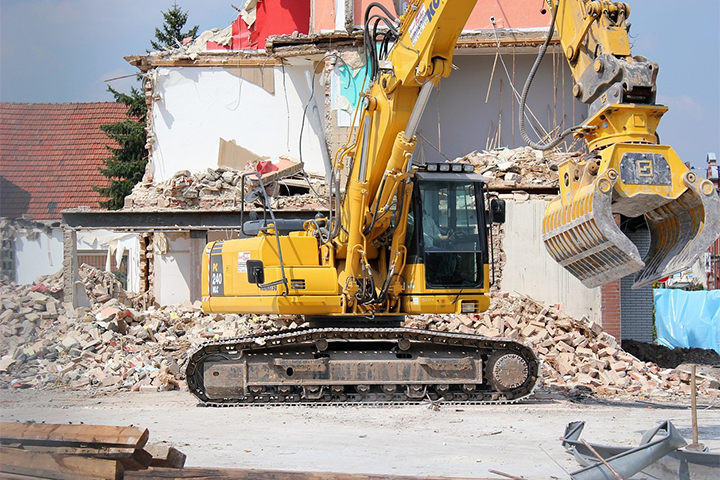
Photo courtesy: Pixabay
Evictions disrupt informal livelihoods and access to schools and healthcare. The social and economic costs are substantial, yet rarely captured in project budgets or official assessments
The steady rise in house demolitions across India highlights a growing tension between rapid urban development and the ability of cities to manage its social impact. What the data show is not just an increase in cleared structures, but a pattern in how economic priorities, legal processes and governance choices are reshaping urban life.
Data from the Housing and Land Rights Network (HLRN) show that the number of houses razed nearly doubled from 53,700 in 2017 to 107,449 in 2023. Over the same period, evictions climbed in tandem, underscoring the scale of disruption linked to demolition drives. This parallel movement suggests that demolitions have become a routine tool of urban policy rather than an exception triggered by emergencies or isolated disputes.
The main drivers are consistent. Slum clearance and infrastructure projects account for most demolitions year after year. Both are central to the push for modern cities—wider roads, transport networks, commercial redevelopment and environmental compliance. But these projects often move faster than housing alternatives for displaced residents. Rehabilitation remains uneven, reaching only a fraction of affected households in several years.

The regional concentration of evictions is striking. In 2023, a small group of states accounted for the majority of demolitions, with the national capital region alone contributing more than half of all evictions. This reflects intense land pressure, high property values and aggressive redevelopment plans rather than population size alone. In contrast, southern states recorded a much smaller share, pointing to differences in enforcement practices and urban planning approaches.
Another major shift is the growing role of courts. Evictions linked to court orders now account for about half of all displaced persons, up from less than one-fifth in 2017. Legal backing provides procedural cover to demolition drives, reducing the scope for administrative delays or negotiated settlements. While this strengthens the formal legality of evictions, it does not automatically ensure rehabilitation or compensation.
The reliance on court orders also changes how accountability works. Once a demolition is tied to judicial approval, responsibility moves away from local officials and toward the legal system. For displaced families, however, the outcome remains the same if alternative housing is not in place. The data show that resettlement remains inconsistent, creating uncertainty for households already operating on the margins of urban economies.
Political responses have tended to be reactive. Announcements of rehabilitation plans often follow public criticism rather than preceding demolition activity. This sequencing exposes a gap between urban planning and social protection. Development decisions are taken first, while housing solutions are addressed later, if at all.

The economic consequences extend beyond housing loss. Evictions disrupt informal businesses, daily wage work and access to schools and healthcare. These disruptions carry costs that are rarely reflected in project budgets or official assessments. Over time, repeated displacement can weaken labour stability and increase pressure on public services elsewhere in cities.
Taken together, the data point to a model of urban transformation that prioritises speed, land recovery and legal clearance. The benefits—new infrastructure and redevelopment—are visible. The costs are less so, but they accumulate quietly through lost livelihoods and growing insecurity among low-income residents.
As demolition drives accelerate and legal backing becomes more common, the challenge is not whether cities will continue to change, but whether policy frameworks can better balance growth with predictability and protection. Without clearer rehabilitation rules and upfront planning, the gap between urban ambition and social stability is likely to widen.