Monday, 05 Oct, 2026

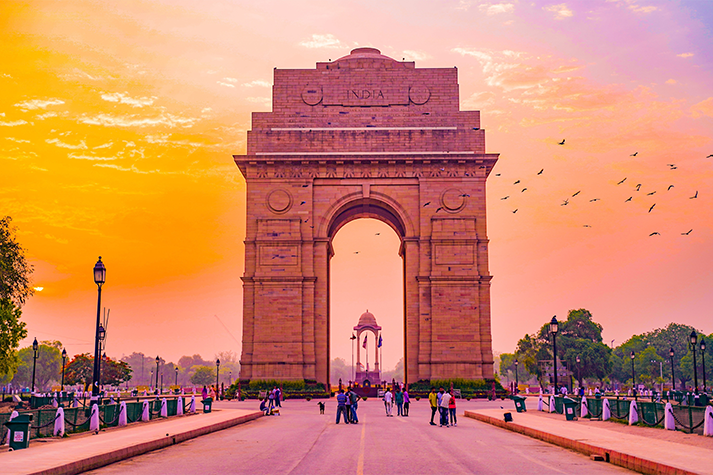
Photo courtesy: Pixabay
Across 36 countries, favourable views of India outnumbered unfavourable ones in 20. The result points to a broader change in how India is seen abroad: its growing economic and strategic weight is making it an increasingly important global player
India’s global image is not uniformly positive. Nor should it be. A country becoming more powerful will attract scrutiny, disagreement and resistance. The more important question is whether India is gaining acceptance as a consequential global power. The latest Pew Research Center survey suggests that it is.
Across 36 countries, 20 recorded a larger share of respondents with favourable views of India than unfavourable ones. Only 16 countries tilted the other way. For a country once widely seen as a developing economy on the margins of global power, this is significant. New Delhi is increasingly being judged as a country whose rise matters.
Europe provides the clearest evidence. Nine of the 10 European countries surveyed had more favourable than unfavourable views of India. Germany’s rating is particularly striking: 63 per cent viewed India favourably, against 29 per cent unfavourably. Germany’s favourable rating has jumped from 47 per cent in 2023 to 63 per cent in 2026.
Britain has moved in the same direction. The favourable view of India rose from 65 per cent in 2023 to 71 per cent in 2026. These are substantial changes, suggesting that India’s growing economic weight, political importance and role in the emerging international order are translating into greater acceptance in two of Europe’s most influential countries.

Japan also has a positive balance, with 55 per cent favourable and 42 per cent unfavourable. The US is more divided: the survey table records 50 per cent favourable and 45 per cent unfavourable. The trend comparison, however, puts US favourability at 45 per cent in 2026, down from 51 per cent in 2023. That decline deserves attention, but India still commands a broadly positive view among a large section of Americans.
The neighbourhood is more complicated, but even here India’s position is stronger than bilateral tensions suggest.
In Bangladesh, 51 per cent view India unfavourably against 42 per cent favourably. Pakistan is overwhelmingly negative, with 91 per cent unfavourable and only 7 per cent favourable. Sri Lanka provides the powerful counterpoint: 79 per cent view India favourably, only 11 per cent unfavourably, while 63 per cent name India as their most important ally.
New Delhi’s neighbourhood standing should therefore not be judged through Islamabad alone. Its size, economic weight and growing ability to provide trade, investment, infrastructure, energy and security are giving it influence that cannot easily be displaced.
India’s strategic outlook is much broader. Indians tend to view both the US and Russia favourably and regard them as important allies. China is viewed unfavourably, seen as a major threat, and President Xi Jinping attracts little confidence.
Pakistan’s outlook is almost the reverse. Pakistanis are overwhelmingly favourable towards China and name it their most important ally. Their views of Russia are more negative than positive. They are also sceptical of the US and Israel, naming them as major threats, though less often than India. Saudi Arabia is among their important allies.
India’s ability to maintain relationships across competing power centres is one of its greatest foreign-policy assets. It has moved closer to the US without becoming a conventional American ally, retained ties with Russia despite Western pressure, and expanded engagement with Europe and Japan while competing with China. That is strategic autonomy adapted to a multipolar world.

The India survey covered 3,566 adults from February 8 to April 27, 2026, while Pakistan’s covered 1,039 adults from April 8 to May 7. The wider exercise covered 42,092 people across 36 countries. Percentages do not necessarily add to 100 because some respondents expressed no opinion.
The timing matters. The Pakistan survey began as US-Iran peace negotiations started in Islamabad; Pakistan was among the few countries where views of the US became more positive during fieldwork. The India survey preceded the later “cockroach” protests over irregularities in nationwide university entrance examinations and youth unemployment.
India is doing well. The strongest signals are the 63 per cent favourable rating in Germany, 71 per cent in Britain, 55 per cent in Japan and 79 per cent in Sri Lanka. India’s global rise is becoming normalised. The world may disagree with New Delhi and continue to criticise it, but it is increasingly doing so with a country it recognises as important. For India, that is a meaningful change: the world is increasingly treating it not as a promise, but as a power.