Thursday, 17 Sep, 2026

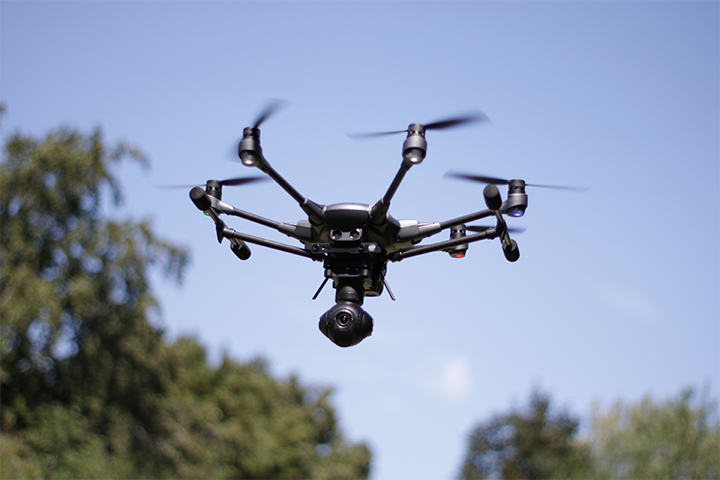
Photo courtesy: Pixabay
Capital is flowing into drones, AI, autonomous systems, cybersecurity and space technologies, as software and autonomy reshape modern warfare
The maiden flight of the first Airbus C-295 assembled in India was more than an aviation milestone. It marked another step in India’s attempt to build a defence industrial base that extends well beyond state-owned arms manufacturers.
Built at Tata Advanced Systems’ new facility in Gujarat, the aircraft reflects a decade-long shift in policy towards reducing dependence on imported military equipment while encouraging private investment, domestic manufacturing and technological innovation.
The numbers illustrate the transformation.
Between 1991 and 2000, only 19 defence technology companies were registered in India. That rose to 194 during 2011-20 as New Delhi opened the sector to greater private participation and expanded domestic procurement. Another 162 companies were established between 2021 and 2025, suggesting that the rapid start-up phase is gradually evolving into a broader industrial ecosystem.
Capital has followed the policy shift.

Investment in Indian defence technology companies increased from just $7.1 million during 2001-10 to almost $1 billion between 2021 and 2025. Investors are increasingly backing businesses developing drones, artificial intelligence, autonomous systems, cybersecurity and space technologies—areas that are becoming as important to modern warfare as traditional platforms.
The sector itself is also evolving.
Military applications still account for almost half of new defence technology companies. But a growing number are developing dual-use technologies with both civilian and military applications, mirroring a global trend in which commercial innovation increasingly shapes defence capabilities.
India is also becoming more visible on the global map. Alongside the United States and the United Kingdom, it now ranks among the countries with the largest number of defence technology companies. That reflects not only the size of its domestic market but also growing ambitions to integrate into global defence supply chains.
Geography matters as well. Mumbai, Bengaluru and Chennai have emerged as the industry's principal hubs, combining engineering talent, research institutions and manufacturing capabilities. Such clusters create the networks needed for innovation, much as Silicon Valley did for the American technology industry.
The transformation is not confined to the private sector.
Public-sector defence manufacturers, once criticised for weak innovation, are raising their investment in research and development. In FY25, India's three largest state-owned defence companies devoted a larger share of revenue to research than their leading private-sector counterparts, reversing a trend seen five years earlier. This suggests competition is beginning to lift innovation across the industry rather than simply shifting activity from public to private firms.

The C-295 programme illustrates why this broader ecosystem matters.
Beyond assembling transport aircraft, it is designed to build capabilities in precision manufacturing, systems integration and aerospace engineering while creating work for hundreds of domestic suppliers. Those capabilities can spill over into civilian aerospace, advanced manufacturing and other high-technology industries, multiplying the economic benefits beyond defence alone.
Yet important constraints remain.
Much of India's defence manufacturing still focuses on assembly rather than the highest-value technologies such as aircraft engines, advanced sensors, propulsion systems and semiconductors. Many critical components continue to be imported, limiting the strategic autonomy that successive governments have sought.
The next phase of India's defence transformation will therefore depend less on expanding factory floors than on expanding intellectual property. Long-term success will be measured not by the number of companies created, but by their ability to develop proprietary technologies, compete in export markets and reduce reliance on foreign suppliers.
The first Indian-built C-295 demonstrates that India's defence manufacturing ambitions are becoming tangible. The larger test, however, is whether this emerging ecosystem can move from assembling global products to designing technologies that the rest of the world wants to buy. That transition—not the maiden flight itself—will determine whether India becomes not only a major defence manufacturer but also a genuine defence technology power.