Saturday, 28 Nov, 2026


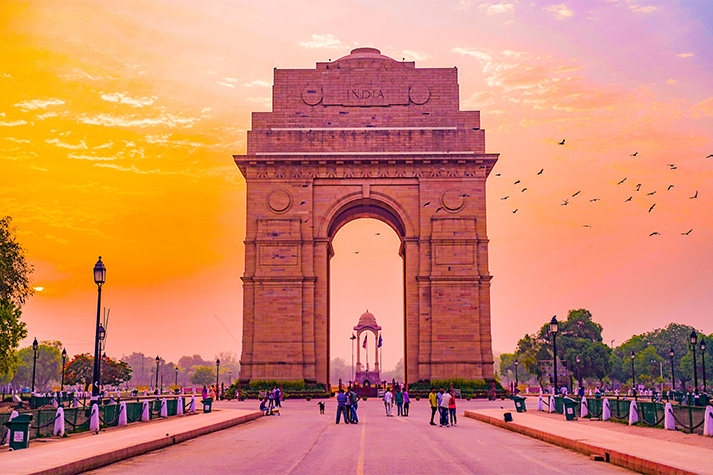
Photo Courtesy: Pixabay
India has widened its strategic reach and strengthened its global standing. The challenge now is to build a stronger economic base to sustain its growing clout on the world stage
India has strengthened its position as Asia’s third most powerful country, narrowing its overall power gap with China to the smallest margin since 2018. The latest Asia Power Index by the Lowy Institute points to a country extending its reach through defence partnerships, diplomacy and cultural influence, even as its economic capability faces some setbacks. The gains are significant: India is strengthening its position in a region where power remains concentrated in the hands of Washington and Beijing.
India scored 40.5 points in the 2026 index, retaining third place behind the United States and China. Both remain classified as superpowers, while India is the region’s only other major power. Japan, Russia, Australia, South Korea, Singapore, Indonesia and Malaysia occupy the next seven positions and are categorised as middle powers.
The improvement is not simply a matter of ranking. India’s overall score rose even as the regional environment became more difficult for several countries. Its growing influence reflects a wider network of security partnerships and economic relationships, alongside a stronger cultural presence. These are important assets for a country seeking a larger role in shaping the Indo-Pacific.

Defence engagement has been a major source of progress. India’s score for defence networks increased by 2.1 points, supported by deeper military engagement with Southeast Asian countries and sales of BrahMos missiles to the region. Its military capability score also improved, by 0.5 points. The gains suggest that India is becoming a more consequential security partner, not merely a country with growing military resources.
Its economic relationships have proved more resilient. Stable trade and investment ties helped India preserve regional connections at a time when those of several other countries weakened. The country moved up two places to seventh in this measure, scoring 19.9 points. This is particularly relevant as geopolitical tensions and trade disruptions encourage countries to diversify their economic and strategic partnerships.
India’s biggest improvement came in cultural influence, where it gained 2.3 points to reach 43.8. The rise reflects progress in cultural projection, information flows and people-to-people exchanges. Such influence may be less visible than military strength or economic output, but it helps build long-term relationships and shapes how a country is perceived abroad.
Diplomacy remains another important source of strength. India scored 70.3 points for diplomatic influence. The report said experts rated Prime Minister Narendra Modi the second-most effective regional leader after China’s Xi Jinping. However, India’s low profile during the Gulf conflict weighed on perceptions of his global leadership. The distinction is important: India has established a strong regional diplomatic presence, but its influence in wider international crises has room to grow.
The country also gained 1.2 points in future resources. This measure captures the potential strength available to a country over the longer term. India’s large domestic market and demographic base give it considerable advantages, provided these are translated into productive employment, investment and technological capacity.
The one significant setback was economic capability. India’s score fell by 0.7 points to 26.4, although it retained third place in the measure. The decline should not be dismissed, but neither should it overshadow the broader improvement. India’s overall standing strengthened because gains in other areas more than offset the weakness in this category. The challenge is to ensure that economic capacity catches up with the country’s expanding strategic influence.
The index’s Power Yield measure offers another perspective. It compares the power a country exercises with what its resources would be expected to deliver. India’s score improved to minus 3.3, narrowing the gap between its potential and actual influence for the first time since 2023. It still has room to make better use of its resources. Japan, by comparison, recorded a positive score of 10.9, while China was close to its expected level at 0.2.
The wider shift in Asia is equally important. The United States and China are now separated by just 5.3 points, the narrowest gap since the index was launched in 2018. The difference in their military capabilities has also reached its lowest level on record. The United States’ diplomatic influence score fell by six points to 76.7, its steepest decline and the fourth consecutive annual fall.
The report attributed the erosion of American influence to developments including the war with Iran, punitive tariffs and calls to scale back military exercises with South Korea. The conflict, which began in February 2026, has depleted US stocks of long-range missiles and weakened perceptions of its diplomatic influence. Yet the report cautions against reading this as the end of American dominance. The regional balance remains bipolar, with neither a middle-power bloc nor growing authoritarian alignment displacing Washington and Beijing.
India’s improved position is therefore more than a symbolic rise in a league table. It reflects growing strategic reach and an ability to build influence across several fronts. The next test is to reinforce these gains with a stronger economic base. A country that can combine industrial capacity, technological progress and productive employment with its diplomatic and defence networks will be better placed to narrow the distance with China. India has strengthened its claim to a larger role in Asia; sustaining that claim will require turning its growing influence into lasting economic power.