Friday, 16 Oct, 2026

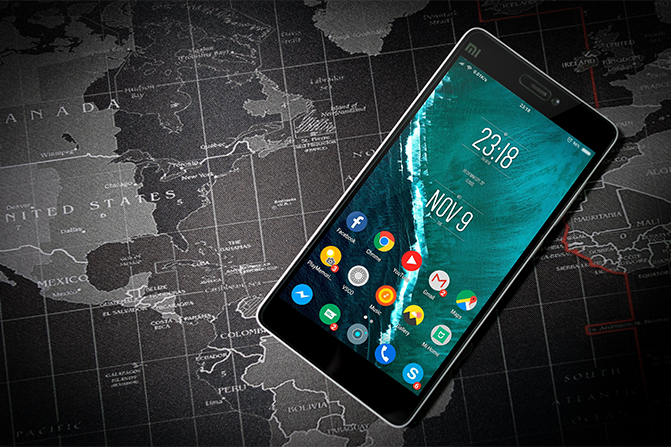
Photo courtesy: Pixabay (Representational image)
New Delhi matters to smartphone makers for more than its huge consumer market. For several brands, it has become a market they cannot afford to lose—and a manufacturing base they increasingly cannot ignore
India has become the most important overseas market for several Chinese smartphone brands, with the numbers showing how dependent some have become on Indian consumers.
India accounted for 34% of Vivo’s global smartphone shipments in 2025, according to research firm Omdia data cited by Business Standard. Vivo also led India’s smartphone market in the second quarter of 2026, with an 18% share of sales. The smartphone maker is now looking to expand its manufacturing footprint in India through a joint venture with Dixon Technologies. The move reflects the importance of India to its global business.
Other Chinese brands show a similar dependence. India accounted for 35 per cent of Realme’s global shipments in 2025, 32 per cent of OnePlus’s and 23 per cent of Oppo’s. Along with Vivo, all three are owned by Chinese electronics major BBK Electronics.
For these brands, a slowdown in India would have a direct impact on their global shipments. Motorola, now controlled by Chinese technology group Lenovo, also gets 20 per cent of its global smartphone shipments from India. It exports smartphones assembled in India directly to the US, making the country an important part of its wider manufacturing network.
India is, therefore, becoming more than a large consumer market for global phone makers. It is also emerging as a manufacturing base from which they can serve other countries.
The dependence is even greater for Nothing, the London-based smartphone company founded by Carl Pei, the former co-founder of OnePlus. India accounted for 71 per cent of Nothing’s global shipments in 2025, making it effectively the company’s main market.
The reason for this concentration is straightforward. Most Chinese smartphone brands, barring Xiaomi, have a relatively limited international footprint. Industry leaders say India has become their most important market outside China, leaving them heavily reliant on Indian demand.
Xiaomi is a clear exception. India accounted for only 12 per cent of its global shipments in 2025. The company has expanded aggressively in Europe and is now the third-largest smartphone player there, behind Apple and Samsung, giving it a more diversified global business.
Transsion is even less dependent on India, which accounted for just 6 per cent of its global shipments. Its business is spread more widely, particularly across Africa, as well as Latin America and West Asia.
Samsung offers another useful comparison. India accounted for 10 per cent of its global smartphone shipments, even though it was the country’s second-largest smartphone brand in the second quarter of calendar 2026, with a 17 per cent volume market share.
The contrast matters. Samsung can be a major player in India without relying heavily on the country because its business is spread across global markets. Xiaomi is moving in the same direction.

For Vivo, Realme, OnePlus and Oppo, India carries far greater weight: between 23 per cent and 35 per cent of their global shipments come from this one market outside China. That offers enormous scale, but also creates vulnerability. A sustained loss of market share in India could quickly affect their global growth.
This helps explain the push towards local manufacturing. Vivo’s proposed joint venture with Dixon Technologies and Motorola’s exports to the US suggest that India is becoming more deeply integrated into these companies’ global plans.
India still relies heavily on imported components and foreign technology, and local assembly does not remove those constraints. But the direction of travel is clear.
The numbers underline the shift: India accounts for 35 per cent of Realme’s global shipments, 34 per cent of Vivo’s, 32 per cent of OnePlus’s, 23 per cent of Oppo’s and 20 per cent of Motorola’s. For Nothing, the figure is 71 per cent.
By comparison, India accounts for 12 per cent of Xiaomi’s global shipments, 10 per cent of Samsung’s and 6 per cent of Transsion’s.
India’s importance in smartphones is therefore about more than the size of its consumer market. For several brands, it has become a market that is too important to lose—and increasingly a manufacturing base they cannot afford to ignore.


 2.png)