Sunday, 04 Oct, 2026

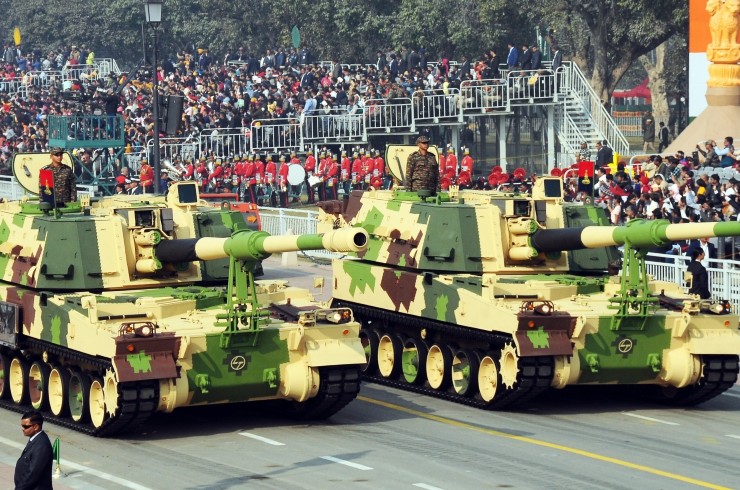
Indigenous defence production has witnessed a sharp and sustained rise over the past decade. Image Source: IANS (Images are for representaional purposes only)
With indigenous seekers, propulsion systems, radars, command-and-control infrastructure and launchers, Akash-NG also reinforces India’s broader push for self-reliance in defence manufacturing.
The Defence Research and Development Organisation on Tuesday successfully conducted user evaluation trials of the Next Generation Akash missile, or Akash-NG, at the Integrated Test Range in Odisha. The successful trials confirmed that the system has met all required performance parameters and is ready for induction into service. Akash-NG is an advanced surface-to-air missile defence system developed by DRDO and manufactured by Bharat Dynamics Limited, and its successful evaluation represents an important step forward in strengthening India’s air defence framework.
User evaluation trials constitute the final stage in DRDO’s three-phase development process. Before a missile system can be inducted, it must clear developmental trials followed by user-assisted trials conducted under diverse operational conditions. Only after successfully meeting these stages does the system undergo user evaluation trials, where it is assessed against the provisional staff qualitative requirements laid down by the armed forces.
During this phase, Akash-NG demonstrated its capability to intercept aerial targets across a wide range of distances and altitudes. The missile successfully engaged very low-altitude targets near the boundary as well as long-range, high-altitude threats. These tests confirmed the system’s accuracy, consistency and responsiveness across multiple operational scenarios, reflecting its readiness for real-world deployment. The trials further showed that Akash-NG is capable of countering high-speed aerial threats, low-flying targets close to the boundary and high-altitude targets at extended ranges. Successful interceptions at varying distances and heights established the missile’s reliability against both nearby low-altitude platforms and distant high-altitude threats.
All major components of the system, including the radio-frequency seeker, dual-pulse solid rocket motor, multifunction radar, command-and-control unit and missile launch vehicle, operated seamlessly as an integrated weapon system. The trials also validated the system’s effectiveness against targets with low radar cross sections, a growing challenge posed by drones, cruise missiles and other low-signature offensive platforms. The Akash missile programme traces its origins to the late 1980s under the Integrated Guided Missile Development Programme led by Dr APJ Abdul Kalam. The first variant of Akash entered service with the Indian Air Force in 2014 and with the Indian Army in 2015. That version has a range of approximately 27 to 30 kilometres and incorporates about 96 per cent indigenous components. In 2020, the Cabinet approved the system for export, following expressions of interest from several foreign governments.
Akash-NG was conceptualised as a more mobile, longer-range and higher-precision system, primarily tailored for the Air Force. Its development began in the mid-2010s, around the time the earlier variant was being inducted. The next-generation version is designed to counter highly manoeuvrable aerial threats with low radar signatures. It offers a range of 70 to 80 kilometres, features a lighter and sleeker design, requires a smaller ground system footprint and uses a canisterised configuration that enhances mobility and storage efficiency.
The missile is equipped with an active radio-frequency seeker, an indigenous launcher, an upgraded multifunction radar and a fully developed command, control and communication system. The canisterised design provides a controlled internal environment that improves shelf life and allows for quicker launch readiness. Its dual-pulse solid rocket motor offers superior energy management compared to the earlier ramjet-based propulsion system. The missile is capable of engaging multiple targets simultaneously, with an effective engagement range of up to 30 kilometres, an operational altitude of up to 18 kilometres, and a speed of roughly two-and-a-half times the speed of sound. The radar associated with the Akash-NG system can conduct surveillance up to 120 kilometres and provide fire control up to 80 kilometres. It can track and engage up to 10 targets simultaneously and provides comprehensive coverage with electronic counter-countermeasures to protect against jamming and deception.
The earlier Akash system has already seen operational use. During Operation Sindoor in May, the Indian Army employed the Akash missile system to intercept multiple Pakistani drone attacks as India responded to cross-border drone and missile activity following the April attack in Pahalgam. These operations demonstrated that the Akash system is not merely a deterrent but a proven weapon in real combat conditions. The successful completion of user evaluation trials places Akash-NG as a key component of India’s layered air defence network. With its extended range, improved accuracy and enhanced capability to detect and neutralise low-radar-signature threats, the system addresses a critical gap between short-range point-defence systems and long-range interception platforms.
With indigenous seekers, propulsion systems, radars, command-and-control infrastructure and launchers, Akash-NG also reinforces India’s broader push for self-reliance in defence manufacturing. Defence Minister Rajnath Singh congratulated DRDO, the Indian Air Force and industry partners on the successful trials, stating that the advanced missile system will significantly enhance the air defence capabilities of the IAF.
The government has taken a number of steps in the last few years for promoting self-reliance in defence manufacturing. Indigenous defence production has witnessed a sharp and sustained rise over the past decade. The value of defence production has grown from ₹46,429 crore in FY 2014–15 to ₹1,50,590 crore in FY 2024–25, reflecting a significant expansion of domestic manufacturing capacity. This growth has been driven by a series of policy initiatives aimed at strengthening the defence industrial ecosystem and boosting exports. One of the key measures contributing to this momentum has been the liberalisation of the foreign direct investment regime in the defence sector. The government raised the FDI cap to 74 per cent under the automatic route for companies seeking new defence industrial licences, while permitting up to 100 percent FDI through the government approval route. These reforms have helped attract investment, technology and global partnerships into the sector.
India’s Defence production
 Source: Department of Defence Production, Ministry of Defence
A particularly important and forward-looking initiative to promote self-reliance and accelerate the development of indigenous capabilities has been the notification of five Positive Indigenisation Lists. These lists identify items that will be procured only from domestic sources within defined timelines. Under this framework, 509 items required by the armed forces and 5,012 items from Defence Public Sector Undertakings have been earmarked for manufacturing within India in the coming years, reinforcing the government’s commitment to achieving defence self-sufficiency.
The government aims to nearly quadruple India's annual defence output to ₹3 lakh crore by 2028-2029, while more than doubling defence exports from the current ₹23,622 crore to ₹50,000 crore. India has transitioned from being heavily import-dependent to increasingly prioritising self-reliance and indigenous defence manufacturing. In a significant boost to exports, the country shipped a diverse range of products, including ammunition, arms, sub-systems, complete systems, and components to nearly 80 nations in the recently concluded financial year.
India has positioned itself as a highly attractive destination for investment in the defence sector. With 788 industrial licences issued to 462 companies, the involvement of Indian industry in defence manufacturing has expanded rapidly. The Department of Defence Production has simplified regulatory processes by introducing a fully digital portal for export authorisations, resulting in 1,762 approvals in FY 2024–25, up from 1,507 in FY 2023–24. This represents a year-on-year growth of 16.92 per cent, along with a 17.4 per cent increase in the number of exporters. Supported by relaxed FDI norms, the Production Linked Incentive scheme and the development of dedicated defence corridors, India now presents strong opportunities for both domestic innovators and international investors.
India’s Defence Exports

Source: Department of Defence Production, Ministry of Defence
During FY 2024–25, the Ministry of Defence concluded a record 193 contracts with a total value of ₹2,09,050 crore, the highest number and value of contracts signed in a single financial year. Of these, 177 contracts worth ₹1,68,922 crore were awarded to Indian companies, highlighting a clear policy shift in favour of domestic manufacturers and a more robust indigenous defence industrial base. This focus on local procurement has also contributed to job creation and accelerated technological advancement within the sector.
Defence exports received a significant boost in the same period, with India supplying a wide range of products, including ammunition, arms, sub-systems, complete platforms and critical components, to nearly 80 countries. This expansion has reinforced India’s standing as a dependable partner in the global defence supply chain. Defence Public Sector Undertakings recorded a 42.85 percent increase in exports in FY 2024–25, underlining the growing global acceptance of Indian defence products and the industry’s increasing integration into international supply chains.





 2.png)