Saturday, 24 Oct, 2026

By: Lakshita Bhagat
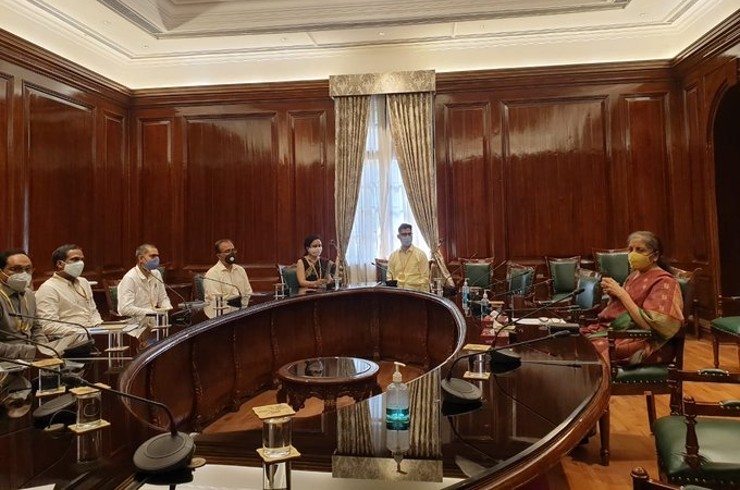
To ensure fiscal sustainability, macroeconomic stability and inter-generational equality, the Fiscal Responsibility and Budget Management Act (FRBM Act) was approved in 2003 and became effective in 2004. Image Source:IANS
The fiscal responsibility legislation binds the centre and states to contain their fiscal deficit within 3% of the GDP. The threshold can be modified under special circumstances as happened during the Covid-19 pandemic when the centre was permitted 4.5% and states 4% of fiscal deficit
Amidst a raging debate on ‘freebies’, people and institutions have put forward their respective opinions. Primarily, there are two sides to the debate, one asking to leave the choice to the voters and the other supporting institutional overview and monitoring of state finances to check their indulgence in unnecessary expenditure. Without going into the discursive milieu as to what constitutes merit or non-merit good or ‘freebie’, let us look at the crux of the matter— fiscal prudence and state capacity, because any subsidy, good or bad, adds to the expenditure.
To ensure fiscal sustainability, macroeconomic stability and inter-generational equality, the Fiscal Responsibility and Budget Management Act (FRBM Act) was approved in 2003 and became effective in 2004. Subsequently, states passed fiscal responsibility legislation. The key idea of the act is to ensure fiscal discipline by putting a lid on fiscal deficit. A fiscal deficit is the difference between the total revenue and total expenditure of the government or simply indicates whether the government is spending beyond its means. The fiscal responsibility legislation binds the centre and states to contain their fiscal deficit within 3% of the GDP. The threshold can be modified under special circumstances as happened during the Covid-19 pandemic when the centre was permitted 4.5% and states 4% of fiscal deficit.
Let us look at the fiscal deficit of the union and the state governments. The central government does not have an excellent record of containing fiscal deficit within the stipulated limit. Presently, the deficit stands at 6.9%. During the previous fiscal year, the spending went above the roof with a fiscal deficit of 9.5% as financial efforts were ramped up to counter the Covid crisis. On the other hand, the aggregate fiscal deficit of states was 4.7% for the fiscal year 2021 and estimated to be 3.4% of GSDP (Gross state domestic product) for 2021-22, which is under the 4% cap. A look at the graph below reveals that the majority of the states are performing decently well except Chhattisgarh, Himachal Pradesh, Jharkhand, and Madhya Pradesh. While the states seem to be performing better than the centre in fiscal consolidation, many states with already mounting debt and fiscal deficit have announced new political promises from bringing back Old Pensions Scheme to free electricity and bus rides, which can severely strain the exchequer. Therefore, long-term sustainable financial management is crucial for both centre and states.
Figure: Fiscal deficit as a percentage of GSDP (2021-22 BE)

Source: Tiwari and Surya (2021, p. 23), PRS
Fiscal consolidation is important and unnecessary spending can threaten fiscal stability. While the FRBM Act lays down rules for prudent fiscal management, it has not proved to be sufficient. Therefore, as recommended by the N.K. Singh headed FRBM Review Committee (2017) and the Financial Commission there is a need for an Independent Fiscal Council, which in its advisory role will assess and provide forecasts for the macroeconomic parameter of centre and states for sustainable growth. The establishment of such a committee would eschew the need for unnecessary institutional interventions and serve the purpose of monitoring whether the centre and states are spending within their means when providing subsidies or freebies.