Sunday, 20 Sep, 2026

The episode underlined a growing trust gap between younger and older generations. Digital exposure, higher comparative expectations and repeated governance failures have left many young people skeptical of institutions.
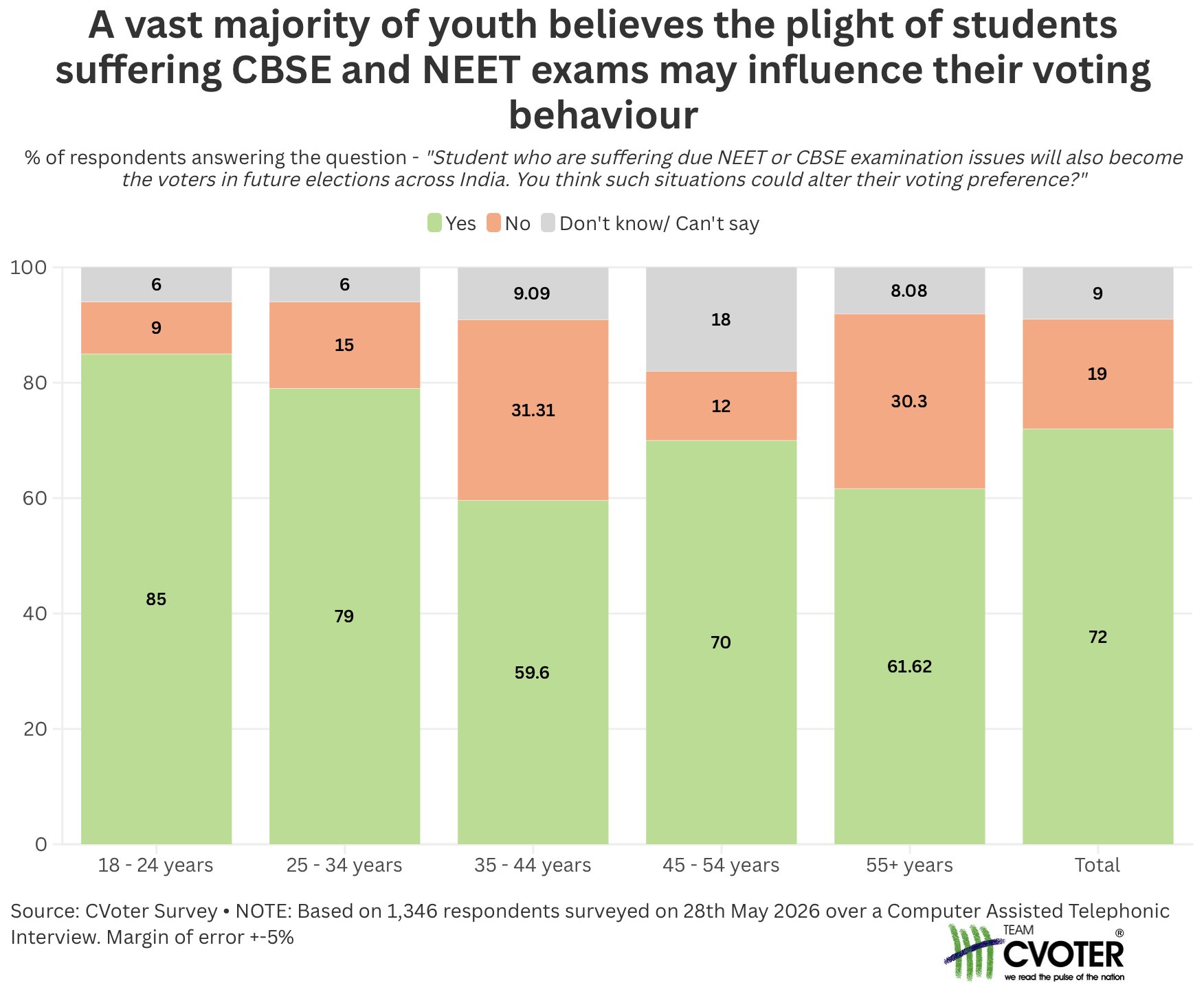
A CVoter daily snap poll discussed by Yashwant Deshmukh and Sutanu Guru and facilitated by Anjum Liyaquat reveals that exam-related controversies are no longer a narrow administrative issue — they are a potent political cue for Young India. According to the poll, 8 in 10 young respondents said such controversies could influence their future voting behaviour, signaling high political salience for fairness, transparency and accountability in education.
Why this matters
Education remains a primary ladder of socioeconomic mobility for millions of young Indians, especially in rural areas. The discussion highlighted that rural respondents tend to be even more sensitive to exam irregularities because fewer alternative pathways exist and the stakes of a single test are often life-changing. In such settings, perceived unfairness quickly translates into anger, distrust and demands for immediate redress.
Punishment or accountability?
The hosts noted a strong public demand — particularly among youth — for decisive action against those responsible, with many calling for the Education Minister’s resignation. However, the conversation emphasized an important nuance: calls for resignation frequently reflect both a desire for punishment and, more importantly, a cry for institutional accountability. Young respondents want transparent, time-bound investigations and systemic reforms, not only symbolic personnel changes.

The widening trust gap
The episode underlined a growing trust gap between younger and older generations. Digital exposure, higher comparative expectations and repeated governance failures have left many young people skeptical of institutions. This cohort expects verifiable reforms — digital audit trails, independent oversight and faster grievance mechanisms — rather than opaque inquiries that fail to restore confidence.
What Young India is demanding
Young respondents consistently prioritized meritocracy, fairness and transparency. They expect short-term relief for affected students (expedited retests, provisional admissions, counseling) paired with long-term structural changes to prevent recurrence. The message is clear: token gestures will not suffice; durable, demonstrable reforms are required.
A broader message to policymakers
The poll and discussion together send a warning to institutions and political leaders: education controversies can mobilize youth sentiment and reshape political prospects. Effective responses must combine immediate, empathetic relief with credible institutional reforms and active youth engagement. Only then can trust be rebuilt and the political fallout contained.
This analysis is based on CVoter’s daily snap poll and the conversation between Yashwant Deshmukh and Sutanu Guru, facilitated by Anjum Liyaquat.