Wednesday, 07 Oct, 2026

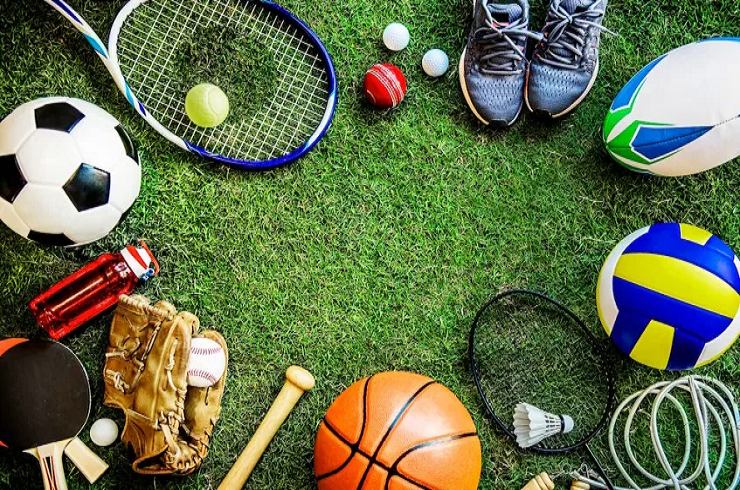
The report highlights a significant opportunity for India to expand its sports equipment exports to an estimated $8.1 billion over the next decade. Image Source: JD
Recent initiatives, including a dedicated allocation of INR 500 crore for sports goods manufacturing in the Union Budget 2026, signal the government’s intent to strengthen this sector.
NITI Aayog’s latest report, ‘Realising the export potential of India’s sports equipment manufacturing sector,’ highlights that India’s presence in the global sports equipment export market remains relatively modest, accounting for only about 0.5 percent of total market share. This is despite having a fairly large domestic manufacturing base. In 2024, the country exported sports goods worth approximately $275 million, but these exports were heavily concentrated in a limited range of products such as cricket gear, inflatable balls, boxing equipment, and athletic or weightlifting items. This narrow product focus restricts India’s ability to diversify its export portfolio and compete more broadly on the global stage.
At the same time, India continues to depend significantly on imports for a variety of sports equipment. This reliance stems from the absence of large-scale manufacturing capabilities and a comprehensive, integrated ecosystem that can support the production of a full spectrum of sports goods. Much of the existing manufacturing activity is concentrated in traditional hubs like Jalandhar and Meerut. These clusters are largely driven by micro, small, and medium enterprises (MSMEs), which, while numerous, often face limitations in scaling up operations, adopting advanced technologies, meeting global quality standards, and building strong export linkages.
However, there are clear signs of growing policy focus aimed at unlocking this untapped potential. Recent initiatives, including a dedicated allocation of INR 500 crore for sports goods manufacturing in the Union Budget 2026, signal the government’s intent to strengthen this sector. Efforts are also being directed toward revitalizing existing manufacturing clusters, supporting MSMEs in scaling their operations, and improving institutional coordination under the Ministry of Youth Affairs and Sports. Together, these measures lay the groundwork for addressing structural challenges, enhancing competitiveness, and positioning India as a more significant player in the global sports equipment market over time.

The report highlights a significant opportunity for India to expand its sports equipment exports to an estimated $8.1 billion over the next decade. This target is linked to achieving roughly an 11 percent share of the global market, which would represent a substantial leap from current levels. Beyond trade gains, this growth trajectory has strong employment implications, with the potential to generate around 54 lakh additional jobs by 2036, thereby contributing meaningfully to livelihoods, particularly in manufacturing-driven regions.
A key enabler of this opportunity lies in the global sporting calendar over the coming decade. A series of major international events, including the 2028 Olympics in Los Angeles, the 2030 Commonwealth Games in Ahmedabad, the 2032 Olympics in Brisbane, and India’s proposed bid to host the 2036 Olympic Games—will drive sustained demand for sports equipment at scale. These events create a recurring procurement cycle that countries with strong manufacturing ecosystems can tap into. For India, this demand pipeline presents a practical and time-bound opportunity to expand exports, rather than a distant or purely aspirational goal.
Importantly, the report underscores that this export potential is grounded in India’s existing manufacturing legacy, which can be further strengthened to meet global requirements. However, despite favorable global shifts such as the “China+1” sourcing strategy, countries like Vietnam and Pakistan have been quicker to capitalize on these changes, while India has lagged behind. One of the key reasons is a cost disadvantage of around 10–20 percent compared to competitors like China and Pakistan. This gap arises from multiple structural issues, including higher input costs for raw materials, relatively lower levels of mechanization, expensive industrial land, and inefficiencies in inland logistics.

Addressing these cost-related constraints is critical for improving competitiveness. At the same time, India can leverage the demand generated by upcoming global sporting events and align it with current policy momentum to scale up exports. Without such interventions, the sector risks continuing on a business-as-usual path, where exports grow at a modest historical rate of around 0.6 percent CAGR and eventually plateau by 2036, leaving India with a marginal global market share of approximately 0.4 percent.
To achieve the ambitious $8.1 billion export target and capture a meaningful share of the global market, the report emphasizes the need for a comprehensive and coordinated strategy. This includes structural reforms to reduce cost disadvantages, targeted fiscal incentives to support manufacturers, and ecosystem-building measures that enhance production capacity, quality standards, and global credibility. Strengthening partnerships with established international brands, modernizing manufacturing clusters, and improving access to global markets through better branding and compliance frameworks are also essential components of this strategy.
The report, titled ‘Realising the Export Potential of India’s Sports Equipment Manufacturing,’ presents a compelling case for sustained, long-term investment in the sector. It positions India at a pivotal moment, where converging factors, such as evolving global supply chains, a decade of major sporting events, and increasing policy support create a unique window of opportunity. By effectively addressing long-standing structural challenges and fostering collaboration between government bodies, industry players, and sports institutions, India can transform its sports equipment industry into a globally competitive export powerhouse.
If successfully executed, this transformation could yield substantial economic and social benefits. In addition to achieving $8.1 billion in exports, the sector could generate millions of jobs, particularly within MSME-led clusters, and reduce the country’s dependence on imports. Over time, this would help establish India as a reliable global supplier of high-quality sports equipment, capable of competing with established manufacturing hubs and meeting the evolving demands of international markets.

.jpg)