Tuesday, 22 Sep, 2026


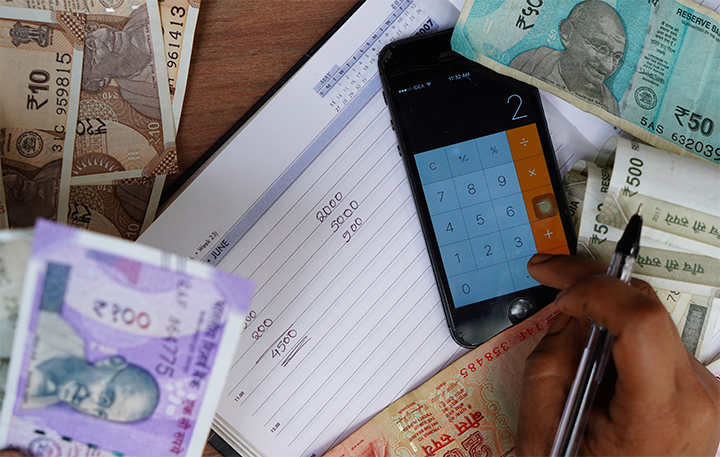
Photo courtesy: Pixabay (Representational image)
The IPO comes from a position of strength. At roughly Rs 5 lakh crore in the unlisted market, NSE is among India’s most valuable financial institutions
After nearly a decade of regulatory deadlock, governance reforms and legal settlements, the National Stock Exchange (NSE) has taken its clearest step yet towards becoming a publicly listed company. By filing its draft red herring prospectus (DRHP) with the Securities and Exchange Board of India (Sebi), the country's largest stock exchange has moved closer than ever to ending one of the longest-running IPO sagas in Indian corporate history.
If completed, the issue is expected to raise around Rs 30,000 crore, according to bankers and brokers, making it the biggest initial public offering ever seen in India, eclipsing Hyundai Motor India's Rs 27,000-crore listing in 2024.
The IPO comprises an offer for sale (OFS) of up to 148.9 million shares, or nearly 6 per cent of NSE's paid-up equity capital. Since the issue is entirely an OFS, the exchange itself will receive no fresh capital. Instead, existing shareholders—including State Bank of India, Bank of Baroda, Canada Pension Plan Investment Board, General Insurance Corporation of India, The New India Assurance Company, National Insurance Company, United India Insurance Company, Stock Holding Corporation of India, MS Strategic (Mauritius) and Aranda Investments (Mauritius)—will sell part of their holdings.

Life Insurance Corporation of India (LIC), one of the exchange's largest shareholders, has chosen not to participate.
Under Sebi regulations, a stock exchange cannot list on itself. NSE's shares will therefore be listed on the Bombay Stock Exchange (BSE). As per the draft prospectus, up to 50 per cent of the issue has been reserved for qualified institutional buyers, at least 15 per cent for non-institutional investors and 35 per cent for retail investors.
Those details matter. Yet they are not the real story.
Unlike most large IPOs, this offering will not finance expansion, fund new technology, build infrastructure or reduce debt. Every rupee raised will simply change hands between investors. From a macroeconomic perspective, the issue will not generate fresh capital formation or directly add to productive investment.
Its economic importance lies elsewhere.
The listing provides liquidity to shareholders who have remained invested for years in the unlisted company. It improves price discovery by allowing the market to determine the exchange’s value transparently rather than through thinly traded unlisted shares. Most importantly, it places India’s largest market institution under the continuous disclosure and governance standards applicable to every listed company.
That may prove to be the IPO’s most enduring contribution.
The exchange’s journey to this point explains why.
NSE first sought Sebi's approval to go public on October 18, 2016. It might have listed years ago had it been an ordinary company. Instead, the proposal remained stalled because the regulator questioned whether the country’s most important market institution had itself met the governance standards expected of listed entities.
The co-location controversy became the central obstacle.

In 2015, a whistleblower alleged that certain brokers had received preferential and faster access to NSE’s trading systems through its co-location facility, enabling them to execute trades ahead of competitors. The allegations triggered multiple investigations into whether some market participants had enjoyed unfair advantages. The controversy evolved into one of the biggest governance crises in the history of India's capital markets and effectively froze the exchange's listing ambitions.
Over the years, NSE repeatedly attempted to revive its IPO proposal, but unresolved regulatory proceedings continued to stand in the way.
In June 2025, the exchange sought to settle the long-running co-location and dark fibre cases by offering to pay more than Rs 1,388 crore. More recently, a Sebi expert panel accepted the settlement proposal, removing one of the largest regulatory hurdles that had blocked the IPO for almost ten years.
The latest filing signals that NSE believes the outstanding issues have now been substantially resolved.
The IPO also arrives when NSE occupies an exceptionally strong financial position. The exchange is valued at roughly Rs 5 lakh crore in the unlisted market, making it one of India’s most valuable financial institutions. Its unlisted shares closed at Rs 2,045 on Wednesday, gaining 3.28 per cent over the past month as expectations surrounding the IPO gathered pace. That valuation reflects the extraordinary expansion of India's financial markets over the past decade.
Investors have long been able to buy banks, insurance companies, brokerages and asset managers. They will now be able to invest in the marketplace through which much of India’s financial activity flows.
Globally, listed exchanges have often become highly profitable businesses because they benefit from network effects, recurring transaction revenues and significant barriers to entry. NSE’s listing could therefore broaden the investment universe available to both domestic and international investors.
Yet the IPO also highlights an important paradox.
The country's largest-ever public issue will do little to finance economic growth directly. Unlike manufacturing companies raising funds to build factories or technology firms investing in innovation, this transaction primarily unlocks wealth already created. It improves liquidity, transparency and corporate governance rather than expanding productive capacity.
The Rs 30,000-crore IPO will undoubtedly rewrite India's fundraising record if it goes ahead. But its greater significance lies elsewhere. It marks the point at which India’s most powerful financial institution is prepared to place itself under the same discipline that governs every company seeking capital from public investors.
For an economy aspiring to become a global financial centre, that may prove to be the more important milestone.