Friday, 23 Oct, 2026

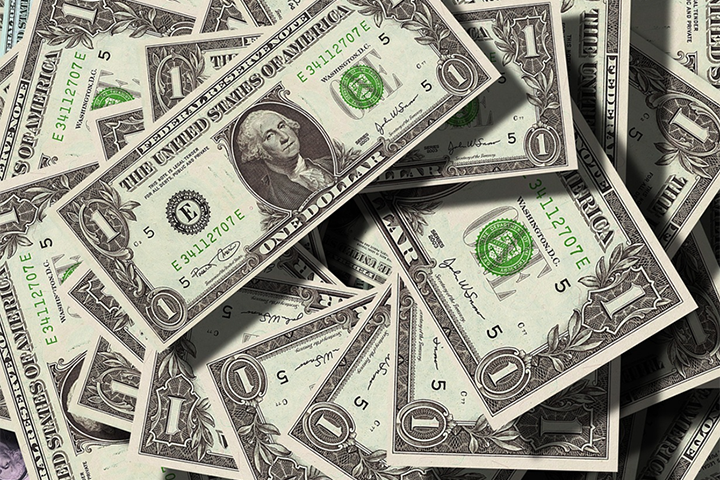
Photo courtesy: Pixabay
A weaker rupee raises import costs, especially for energy, fuelling inflation and complicating monetary policy at a time of uneven growth
India’s foreign exchange reserves have fallen sharply in recent weeks, offering an early signal of the economic strains building beneath the surface as global conditions turn less favourable.
Data released by the Reserve Bank of India show that reserves dropped by $11.41 billion to $698.35 billion in the week ending March 20. Over three weeks, the decline totals more than $30 billion—a sizable drawdown for a country that has long relied on its reserves as a buffer against external shocks.
At first glance, the headline number still appears reassuring. India’s reserves cover about 11 months of imports, a level typically considered comfortable for emerging economies. But a closer look reveals a more complicated picture.
Hidden pressures beneath the surface
Much of the recent decline was driven by a sharp fall in gold reserves, which dropped by $13.49 billion in a single week. This is largely a valuation effect — reflecting falling gold prices—rather than outright selling. Meanwhile, foreign currency assets, the largest component of reserves, actually rose modestly.
Yet economists warn that the more important issue lies off the balance sheet: the central bank’s large forward market position. The RBI has built up a substantial net short dollar position—effectively committing to sell dollars in the future — which reduces its usable firepower.
By January, this forward book showed a dollar deficit of $67.8 billion. Market estimates suggest that this could have widened to around $100 billion by March.
When these obligations are taken into account, the import cover falls to roughly 9.4 months—and closer to 7.2 months when combining spot reserves with forward exposures, according to some estimates. That is still adequate, but no longer overwhelmingly comfortable.
A weaker rupee, a more cautious central bank
The pressure is already visible in the currency market. The Indian rupee has fallen more than 4 per cent against the dollar in March alone, and nearly 10 per cent over the current financial year — its steepest annual decline in more than a decade.
In the past, the RBI has actively intervened to limit sharp movements in the rupee. But the changing reserve dynamics suggest that strategy may be evolving.

Rather than defending a specific exchange rate level, policymakers are likely to focus on smoothing volatility—stepping in only to prevent disorderly swings. This marks a subtle but important shift: from control to containment.
Why oil and geopolitics matter
The broader concern is not just financial, but structural. Rising global oil prices — exacerbated by tensions in West Asia—are increasing India’s import bill, widening its external deficit and putting further pressure on reserves.
At crude prices of around $90 per barrel, India’s import bill could rise to $911 billion in the next financial year, up from $814 billion this year. If geopolitical tensions persist, the country’s balance of payments could slip into a deficit of as much as $40 billion.
That would require the RBI to either draw down reserves further or attract larger capital inflows—both of which carry risks in a volatile global environment.
The valuation trap
Another complicating factor is the so-called “valuation effect.” When the dollar strengthens—as it often does during global uncertainty—the value of non-dollar assets in India’s reserves declines. At the same time, falling gold prices add to the losses.
Historically, such valuation effects have shaved off as much as $20 billion annually during periods of global risk aversion. Combined with active dollar sales by the RBI, this can accelerate the depletion of reserves even without a dramatic change in trade flows.
What it means for the economy
For India, the implications are gradual but significant.
First, a weaker rupee raises the cost of imports, particularly energy, which can feed into inflation. That, in turn, complicates monetary policy at a time when growth remains uneven.