Friday, 16 Oct, 2026

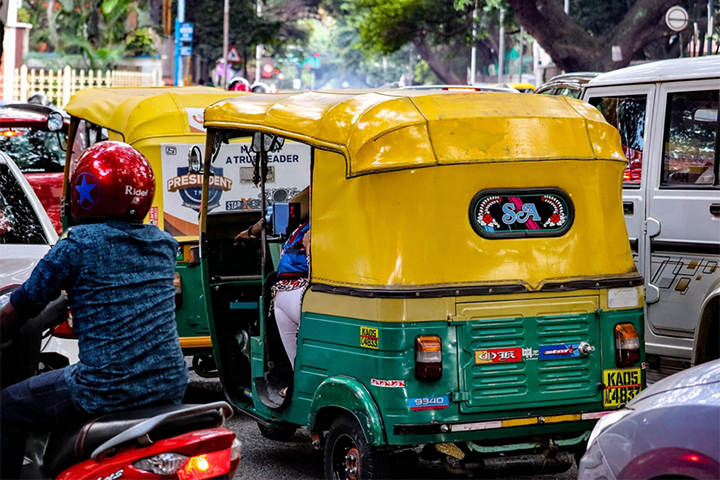
Photo Courtesy: Pixabay
Despite rising crude prices amid the conflict in West Asia, March volumes stayed robust at over 2.4 million units, up 12% year-on-year—suggesting demand remains resilient to external shocks in the short term
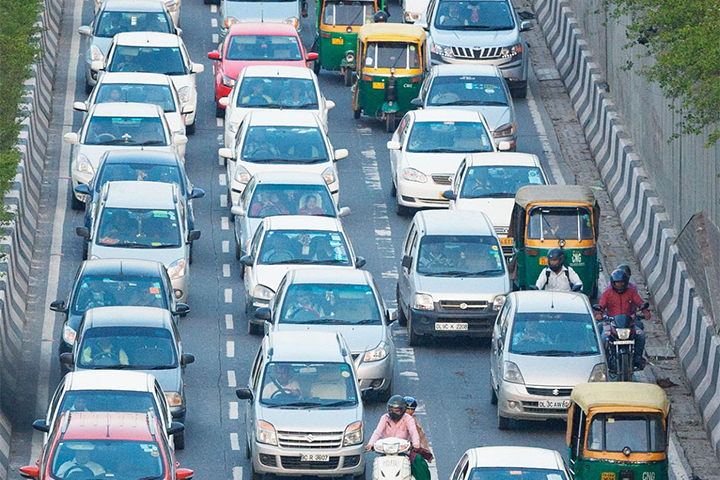
India’s automobile market has closed FY26 at a record high, with sales crossing 29.5 million units and marking growth of over 12 per cent. The headline number signals more than just a cyclical rebound—it reflects a broad-based expansion in demand, policy support, and a gradual transition in how Indians move.
The scale of growth is striking. Volumes have already reached 29.42 million units as of March 30, compared with about 26.1 million in the previous year. Growth has been spread across segments. Two-wheelers crossed 21.1 million units, reinforcing their dominance as the backbone of personal mobility. Passenger vehicles touched 4.6 million units, while three-wheelers climbed to 1.35 million, up from 4.2 million and 1.2 million respectively a year earlier. This is not a narrow recovery—it is a system-wide expansion.
At the heart of this surge is rural demand. Improved cash flows, better farm incomes, and easier financing have brought first-time buyers back into the market. Two-wheelers, in particular, have benefited from this shift, acting as a proxy for rural economic health. The resilience of demand even amid global uncertainties suggests that domestic consumption remains a powerful anchor for growth.
Policy support has played a catalytic role. GST tweaks, income-tax relief and lower borrowing costs have reduced the effective cost of ownership. At the same time, targeted schemes such as the PM E-DRIVE programme and the push for E20 ethanol blending have nudged both consumers and manufacturers toward cleaner alternatives. The combined effect is visible not just in higher volumes, but in changing composition.
Electric vehicles are the clearest sign of this transition. EV sales crossed 2.5 million units for the first time, up from about 2.05 million in FY25. While internal combustion engine vehicles still dominate, the pace of EV adoption is accelerating. Private electric cars saw an 86.6 per cent jump, while three-wheelers in passenger transport now have a 62.8 per cent EV share. This is not incremental change—it is a structural shift in last-mile and urban mobility.
The timing of demand also reveals how the market functions. Sales patterns followed a familiar sawtooth cycle, with sharp peaks during the festive season. October and November alone accounted for nearly 25 per cent of annual volumes, with sales of 4.06 million and 3.33 million units respectively. These spikes were supported by rural liquidity and aggressive financing by manufacturers. January typically saw a slowdown, as buyers delayed purchases to maximise resale value, while March witnessed a secondary surge driven by fleet operators seeking tax advantages before the financial year-end.

What stands out is the market’s resilience. Even with crude prices rising amid the West Asia conflict, March volumes remained strong at over 2.4 million units, up 12 per cent year-on-year. This suggests that demand is not easily derailed by external shocks, at least in the short term.
For the industry, the implications are twofold. First, India’s auto market is becoming more consumption-driven and less dependent on global cycles. Second, the transition toward cleaner and more efficient mobility is gathering pace, though it remains uneven across segments.
For policymakers, the challenge will be to sustain this momentum without distorting incentives. Continued support for EVs, stable tax policies, and investment in charging infrastructure will be key. For manufacturers, the message is clear: scale alone is no longer enough. The future lies in adapting to a market that is becoming greener, more technology-driven and increasingly shaped by domestic demand.
FY26 may be remembered as a record year. But more importantly, it marks a turning point in how India’s mobility story is being rewritten.