Saturday, 03 Oct, 2026

By: Manya Upreti
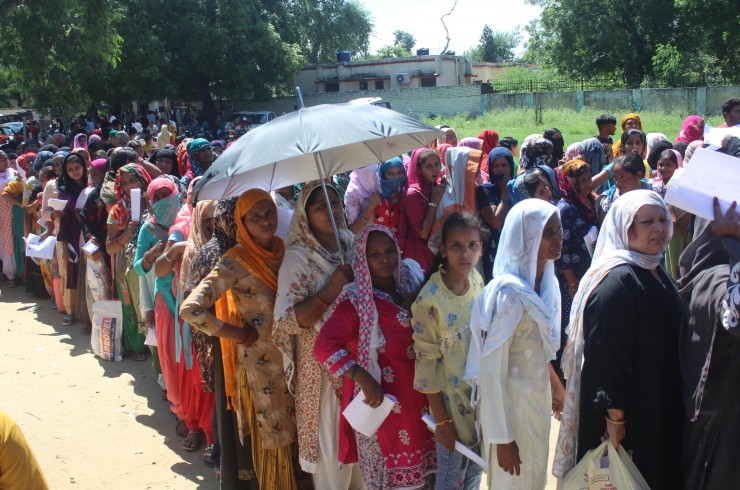
In India, the introduction of universal suffrage in 1950 signaled a watershed since it granted women the same voting rights as males. Image Soure: IANS
Several women's empowerment movements, like the Women's Reservation Bill and initiatives like "Beti Bachao, Beti Padhao," have emphasized the importance of female participation in the political process.
Women's participation in the democratic process has increased dramatically since the early days of voting, when they had limited access to polling booths. This shift in female voter involvement has not only transformed the political landscape but has also prompted political parties to develop policies that meet women's concerns and rights.
Due to societal and cultural constraints that limited women's access to public life, female voter participation was much lower in the early years of India's democracy. However, these obstacles started to fall as society, education, and legal reforms evolved throughout time. In India, the introduction of universal suffrage in 1950 signaled a watershed since it granted women the same voting rights as males. However, it took many years for these rights to result in a significant increase in female voting participation.

Several factors have contributed to this rise:
The governments of Madhya Pradesh and Karnataka have recently made considerable efforts to empower women through cash transfer programs. With the help of these programs, women will be able to meet their diverse requirements and move closer to achieving economic independence. The Gruha Lakshmi scheme, which aims to provide women who are the heads of families with ₹2,000 per month, was introduced by the Karnataka government on August 30. According to Chief Minister Siddararamaiah, up to 1.1 crore women will benefit from the funding. Rahul Gandhi, a party member, and Mallikarjun Kharge, the head of the Congress, introduced the program at a gathering in Mysuru. In a bid to promote the welfare and empowerment of the girl child, the Madhya Pradesh government has implemented the 'Ladli Behna' Yojna. It was launched by the Madhya Pradesh government in 2006 as a part of its commitment to promoting gender equality and enhancing the status of the girl child in society. Shivraj Singh Chouhan, the chief minister of Madhya Pradesh, stated that starting in October, 1.25 crore women will receive ₹1,250 under the Ladli Behna Yojana, with a progressive increase to ₹3,000 per month. Additionally, he declared a 35% reservation for women in public employment.
Women are becoming a more significant vote bank than ever before because of the rising participation of female voters in elections. Political parties are adjusting to this change by giving emphasis to issues that matter to women, nominating more women, and using focused campaign tactics. The influence of female voters in this changing political environment is expected to grow as parties realize that acknowledging and resolving women's problems is not only a political tactic but also a sign of democratic responsiveness and inclusivity. As a result, women's opinions are appreciated and heard in politics, which helps to promote a more equitable and representative government.